
STEAM THERMOLYSIS
Steam thermolysis
for tyre recyclers
Patented technology for higher-value recovered carbon.
ThermoSteam develops modular steam-thermolysis technology for existing tyre recycling sites. We license the process and provide the know-how needed for industrial deployment with partners.
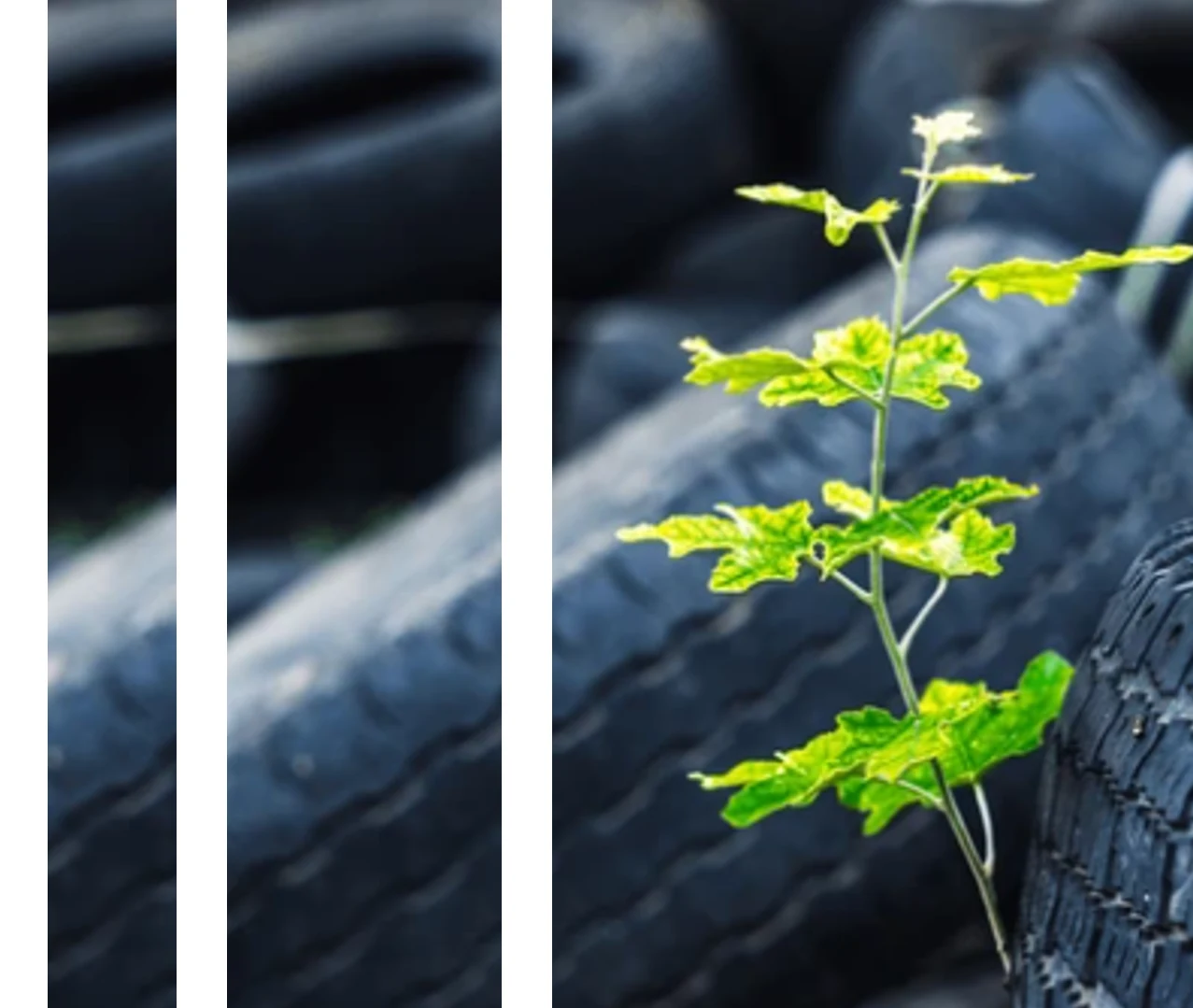
Recognition

AceON Accelerator · Batch #6



The challenge: bringing tyre-derived carbon back into industry
Europe has established systems for collecting and treating end-of-life tyres. Yet processing waste and returning tyre-derived materials to manufacturing are different challenges. Manufacturers need recovered materials with consistent properties, clear specifications and evidence that they can be supplied reliably.
Conventional tyre pyrolysis generates a carbon-rich solid, commonly called recovered carbon black (rCB). Its characteristics vary with feedstock and processing conditions. When the material does not meet industrial needs, recyclers may have to sell into lower-value markets or pay for further treatment.
Mechanical recycling produces useful rubber granulates, but certain established applications face regulatory restrictions. Operators often have feedstock, equipment and industrial sites already in place, making alternative recovery routes relevant to their business.
Why now
Europe generated around 3.9 million tonnes of end-of-life tyres in 2024, with an estimated 97% treatment rate. Treatment is well established; the changing market and regulatory environment puts greater pressure on the economic value of what recycling produces.
Changing market conditions
- October 2031: The EU restriction on synthetic polymer microparticles will apply to granular infill for artificial sports surfaces, affecting an established outlet for recycled tyre rubber.
- Spain, 2030: At least 59% of end-of-life tyre materials must be recycled or materially recovered, while energy recovery is limited to 26%.
- Spain, 2035: Those targets rise to at least 65% for material recovery and at most 20% for energy recovery.
These shifts increase the importance of material outlets that can absorb industrial volumes, particularly for recyclers exposed to restrictions on traditional uses.
TECHNOLOGY
Our technology
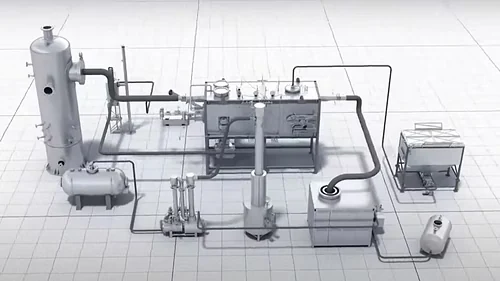
ThermoSteam converts prepared end-of-life tyre feedstock in a continuously operating thermochemical reactor using superheated steam. Steam supplies heat to the material while the reactor conditions are controlled throughout the conversion.
The process separates solid material from the vapour stream. Vapours are cooled to recover liquid fractions, while gases that do not condense can be returned to support the system’s heat demand. The resulting material streams are outlined below.
A key development focus is the carbon itself. The process is designed to influence its properties as it forms inside the reactor, rather than relying entirely on treatment afterwards. This may reduce post-treatment requirements and provide a route to carbon grades suited to industrial applications.
Recovered carbon
The solid carbon fraction, being developed for use in rubber and other industrial compounds once suitable grades and repeatable characteristics are established.
Liquid hydrocarbons
Condensed hydrocarbon fractions with potential use as industrial feedstocks, subject to characterisation and application-specific requirements.
Steel and process gas
Steel is recovered from the feedstock; non-condensable gas can be used to support the process energy balance.
Process control and repeatability
Steam flow, temperature and residence time can be adjusted to define a repeatable operating window. Development work focuses on understanding how those settings affect material yields and carbon characteristics, and on documenting conditions that can be transferred to larger modules.
The process is patent-protected and builds on more than 15 years of development. Internal modelling indicates potential energy savings of around 30% compared with conventional wall-heated pyrolysis. This is a modelled estimate, not a result measured at commercial scale.
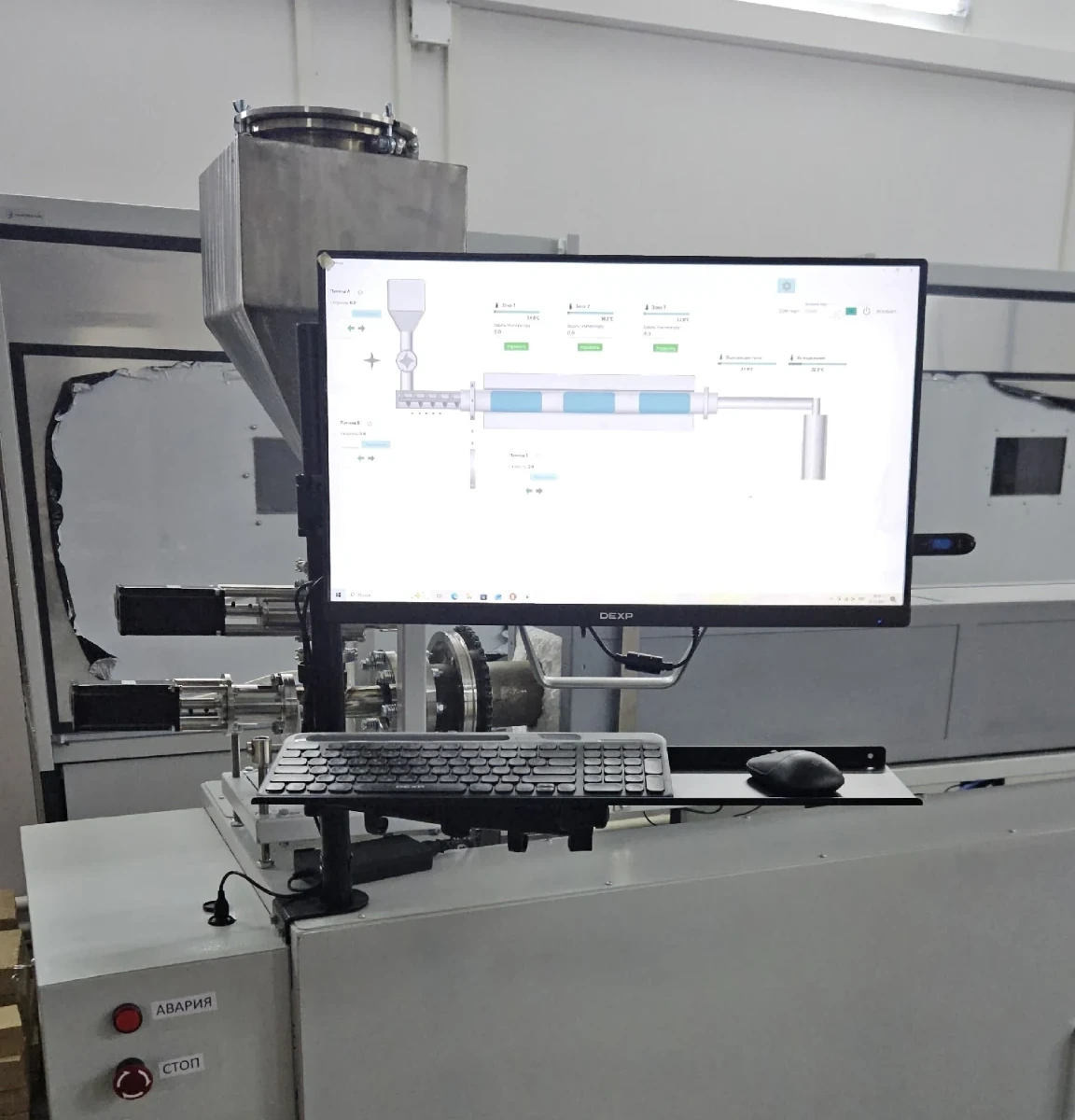
Technical validation
TRL 5: technology validated in a relevant environment. Continuous steam-thermolysis processing has been demonstrated using real end-of-life tyre feedstock in laboratory-scale campaigns. These trials establish an operating basis beyond a one-off batch experiment.
The campaigns generated operating data and samples of the recovered products. That information helps identify process settings to optimise, measurements to reproduce and questions to resolve before moving to a larger unit.
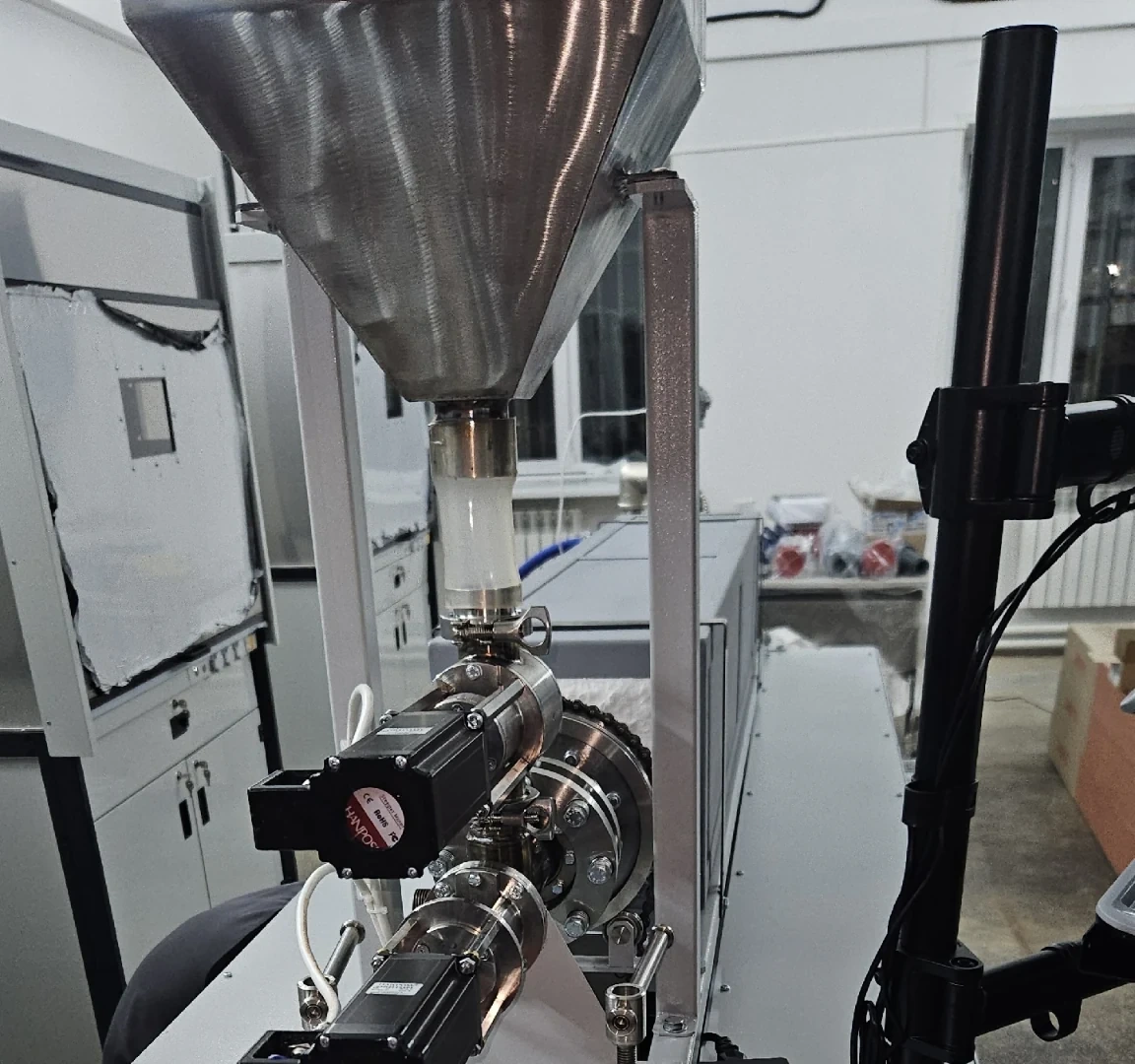
Recovered carbon: what has been demonstrated
Recovered carbon produced by the process was incorporated into an SBR rubber compound as a functional filler without chemical activation. This demonstrated a use in a formulated material, beyond recovering the carbon simply as a fuel.
This is an early technical result, not commercial approval of a particular carbon grade. Further work must show whether properties and performance remain consistent across samples and meet the requirements of specific industrial applications.
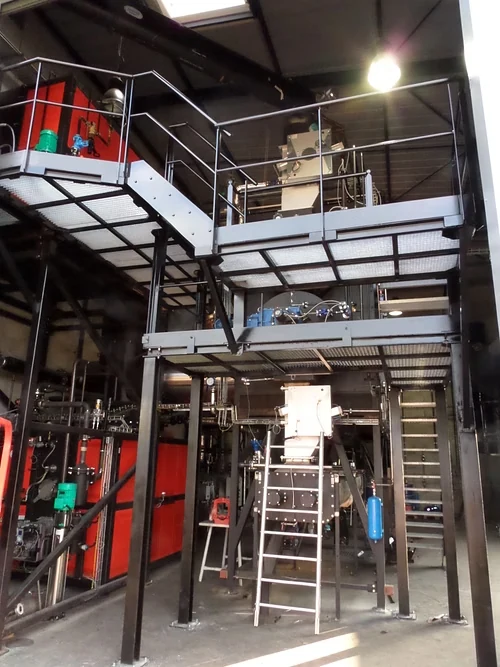
Independent validation and scale-up
The next phase brings together independent laboratory work, trials with potential customers and preparation of the engineering basis for a demonstration module.
- Measure recovered-carbon characteristics and consistency through external laboratories.
- Test selected material applications with industrial partners and refine product specifications.
- Prepare the process design basis for a 300 kg/h demonstration module, including equipment integration and operating requirements.
ThermoSteam has received 15+ letters of interest and support from industrial and research contacts. These relationships are helping shape testing plans and potential industrial collaborations.
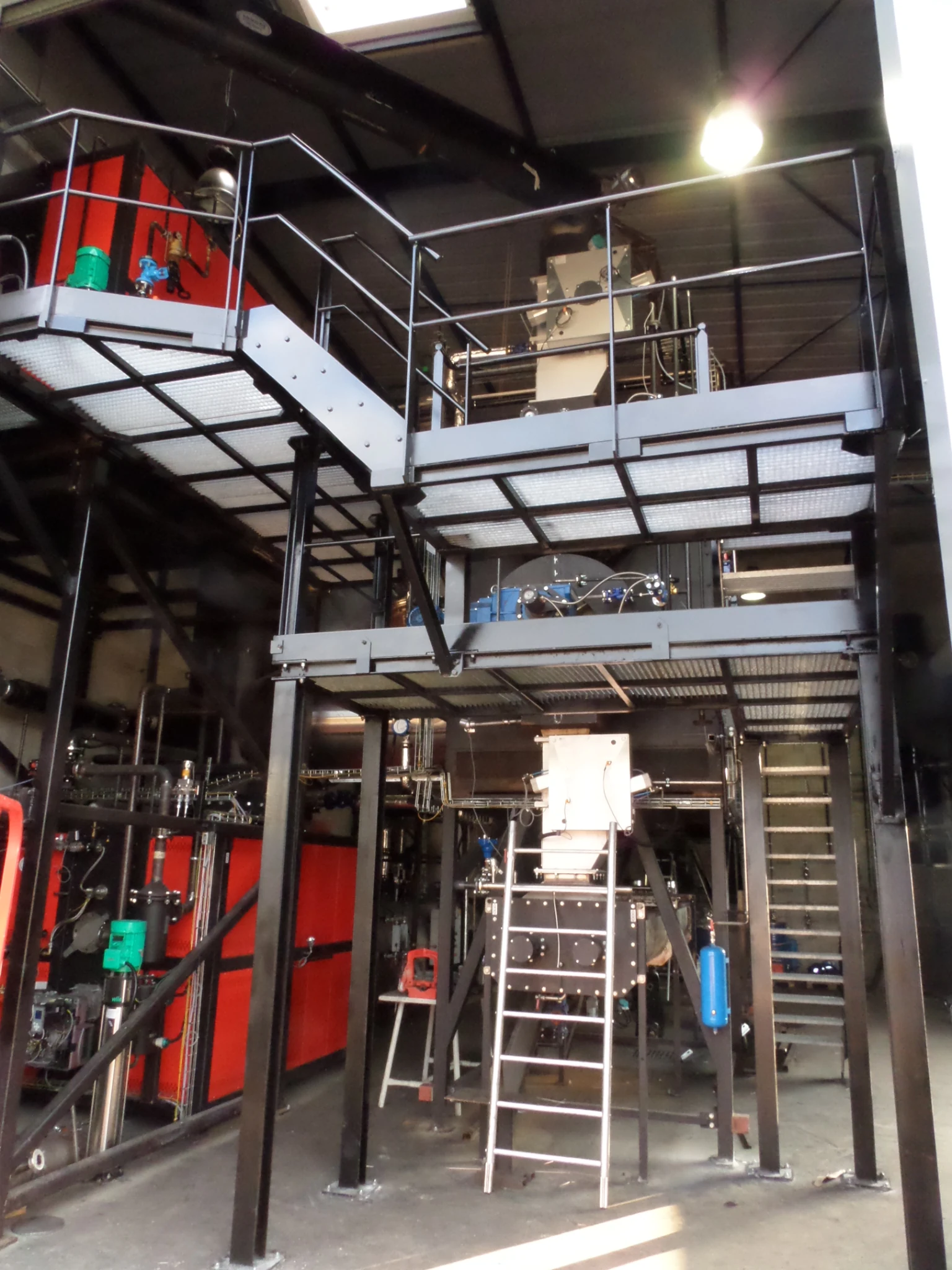
Technology licensing and industrial partnerships
ThermoSteam is a technology and know-how company. We license our process to existing tyre recyclers rather than operating recycling plants ourselves. Engineering and manufacturing partners build and integrate the modules; the recycling operator owns and runs the installation.
The commercial model combines an upfront technology licence, a production-linked royalty and ongoing technical services. ThermoSteam provides process guidance, operator training, support during commissioning and operating and quality-control procedures.
Projects are defined around the conditions of each site: feedstock preparation, available utilities, operating capacity and the materials the operator intends to sell. This allows the technology package to be adapted to an existing industrial facility.
Who we work with
For tyre recycling operators
For thermal recyclers, steam thermolysis offers a route to explore recovered-carbon grades for more demanding applications. For mechanical recyclers, it may provide an additional processing option for suitable tyre fractions. We assess these opportunities against the operator’s available feedstock and potential markets.
For engineering and manufacturing partners
We welcome teams experienced in thermal equipment design, fabrication, automation, safety systems and industrial commissioning. Collaboration can cover module engineering, manufacturing documentation, control systems and integration with existing plant utilities.
For industrial carbon buyers
We work with carbon users in rubber, plastics and related industries to identify promising applications and assess performance in real formulations. Sample evaluation and feedback on material properties help direct product development towards uses with a practical route to adoption.
For research and testing partners
Independent laboratories and applied research groups can contribute analytical methods, material characterisation, emissions assessment and repeatability studies. We value collaborations that generate comparable results and practical evidence for process development.
Team


Contact
Get in touch to discuss technology licensing, industrial collaboration, product testing or research partnerships.